Your first tattoo: artist, placement, the day and healing
For a first tattoo, choose the artist by their healed work in the style you want and pick a forgiving spot such as the outer forearm, upper arm, calf or thigh. Make it big enough for its detail to last. Bring your questions to a consultation, arrive fed and rested with no alcohol in you, and follow your artist's aftercare exactly.
The planning itself (one design, a size in centimetres, a placement tested from several sides, a brief for the artist) is covered step by step in how to plan a tattoo.
Choosing a design and an artist
A design you have wanted for a year is a safer bet than one you saw last week, so keep a folder of references for a while and see which ones you still like when you come back to them. If you have nothing yet, the best AI tattoo generators can start the folder, as ideas for your artist to redraw.
Then look for an artist who already does that style well. Go through their portfolio on their own site or Instagram and look for three things. First, healed photos, taken weeks or years later, because fresh work always looks sharper than it will stay. Second, pieces close to the size you have in mind, since an artist known for large back pieces may not enjoy a small wrist piece, and the reverse. Third, clean lines and even shading across many tattoos, so you know the good photo wasn't a one-off.
Check the studio, too. The NHS advises getting tattoos only from licensed premises, and says infection from unsterilised equipment is unlikely in licensed UK studios. Elsewhere, check what your local authority requires. Think Tank Tattoo describes what you should see at the appointment: the artist washes their hands and works with sterile, single-use equipment.
Booking works differently from studio to studio. Often each artist keeps their own diary, and you book by email or a form with your idea, references, placement and rough size. Many studios take a deposit to hold the date. Speakeasy Custom Tattoo, for example, asks for a non-refundable deposit of $50 to $200 that goes towards the first session and is lost if you miss or cancel. Read the deposit and rescheduling rules before you pay, and expect to show photo ID: most studios won't tattoo anyone under 18.
What is the best placement for a first tattoo?
The outer thigh, outer upper arm and calf rank first: they are among the least painful places and clothes cover them easily. The forearm hurts as little but is on show most of the year. The upper back and chest hurt a little more and hide well. Avoid the ribs, spine, hands and ankles for a first piece.
Ranked by pain first, since a first tattoo is your first time under the needle, then by how easily clothes cover it; within a tie, our pick. The full rankings by pain and by aging are in the best tattoo placements.
| # | Placement | Why | Size | Pain | How it ages | Visibility | |
|---|---|---|---|---|---|---|---|
| 1 | Outer thigh | thick muscle and little sun; room for a large piece | 12–20 cm (4.7–7.9 in) | lower | well | low; trousers hide it, shorts show it | open it on the planner |
| 2 | Upper arm | muscle and fat over the bone; can stretch with weight or muscle | 8–15 cm (3.1–5.9 in) | lower | fair | medium; a T-shirt sleeve covers most of it | open it on the planner |
| 3 | Calf | padded by muscle; legs catch summer sun | 8–15 cm (3.1–5.9 in) | lower | fair | medium; shorts and skirts show it | open it on the planner |
| 4 | Forearm | padded on the outer side; the outer arm catches sun | 10–15 cm (3.9–5.9 in) | lower | fair | high; short sleeves show it | open it on the planner |
| 5 | Upper back | little movement and little sun; bonier over the shoulder blades | 10–20 cm (3.9–7.9 in) | moderate | well | low; hidden by any top | open it on the planner |
| 6 | Chest | padded over the muscle, bony over the breastbone; can stretch with weight | 10–15 cm (3.9–5.9 in) | moderate | fair | low; most shirts cover it | open it on the planner |
A first tattoo is also your first time finding out how you handle the needle, so a spot with more padding helps. Healthline's pain chart puts the forearm, the upper arm and shoulder, the outer thigh and the calf among the areas with low to moderate pain, and gives the general rule: the least painful places have the most fat, the fewest nerve endings and the thickest skin. Bony areas such as ribs, spine, ankles and hands usually hurt more. The tattoo pain chart goes through the whole body.
These areas are also flat enough for a medium design to sit without much distortion, and ordinary clothes cover them when you want. A forearm piece is on show most of the year, which suits some jobs better than others. The tattoo placement guide compares each area in more detail.
One more thing to look at is the spot itself. The American Academy of Dermatology suggests getting a new tattoo where there are no moles, because ink can hide the early signs of skin cancer.
Questions to ask at the consultation
Take these questions to the consultation:
- Have you tattooed this style at this size before, and can I see healed photos?
- How would you change my design so it still reads well in ten years?
- Is the size I've picked big enough for the detail, or would you go larger?
- Does this placement suit the design, or would it sit better somewhere else?
- How many hours will it take, and will it be one session or several?
- Roughly what will it cost, and do you charge by the hour or by the piece?
- How much is the deposit, and what happens to it if I need to reschedule?
- When will I see the final drawing, and can I ask for changes?
- Should I avoid any medicines, such as aspirin or ibuprofen, before the session?
- What aftercare do you recommend, and what should I buy before the day?
Listen to how the artist explains things, too. Someone who suggests a bigger size or a simpler line, and explains why, is usually thinking about how the tattoo will age.
The day itself
Treat it like a long appointment that will tire you out. Think Tank Tattoo's first appointment guide asks you to sleep normally the night before and eat a proper meal with protein and carbohydrates somewhere between 30 minutes and two hours before you start. Drink water steadily over the days beforehand rather than all at once that morning, keep coffee moderate and skip alcohol. If you take aspirin or ibuprofen, ask about them beforehand, since both can thin the blood. Never stop a prescribed medicine without talking to whoever prescribed it.
Wear loose, dark clothes that reach the area without pressing on it, and that won't rub on the way home: shorts for a calf or thigh, a vest or a loose short sleeve for the upper arm. Bring photo ID, payment, water and a snack. Arrive with the area clean and free of sunburn.
At the studio you sign a consent form and the front desk checks your ID. Then the artist puts a stencil of the design in place. This is the last moment to change position, angle or size, so look at it in a mirror while you stand, sit and move your arm or leg, and ask for it to be moved if it's off. Most artists then work the outline first and add shading or fill afterwards. The first lines often feel like a hot scratch. Ask for a break when you need one, have some water, and tell the artist straight away if you feel faint or sick.
Aftercare basics
Your artist's instructions come first, because wraps and products differ and they know what they used. Cleveland Clinic's aftercare guide gives a typical routine. Wash your hands before you touch it. Soak the bandage in warm water and peel it off gently when your artist says it can come off. Then wash the tattoo twice a day with mild, fragrance-free soap and warm water, without scrubbing, pat it dry with a clean paper towel and put a thin layer of moisturiser or the recommended ointment on it twice a day.
Let scabs fall off by themselves; picking them can pull out ink. Wear loose, breathable clothes over it. Cleveland Clinic advises keeping it out of direct sun while it heals and not soaking it in baths, pools or hot tubs until it has fully healed. Once it has, the AAD recommends a broad-spectrum, water-resistant sunscreen of SPF 30 or more on tattoos, because UV light can fade ink.
Some redness, oozing and soreness in the first days is normal. Fever, heat in the area, a bad smell, pain that gets worse instead of better, or red streaks spreading out from the tattoo are signs of infection, and you should see a doctor.
How long healing takes
Healthline describes the stages most people go through: oozing and redness in about the first week, itching and flaking in weeks one and two, then peeling in weeks two to four. The ink itself does not flake off with the dead skin, even though the tattoo can look cloudy for a while.
A tattoo can look healed before it is. Cleveland Clinic says the top layer is usually healed by about two months and the deeper layers can take several more months. Healthline says full healing can take as long as six months, longer on joints and other areas that bend, and for large or detailed colour work.
Common regrets, and how to avoid them
Three regrets are easy to check for in advance. Where it goes matters too: the placements that age best keep a design sharp for longest, and there are lists of the best placements for women and for men.
Too small for its detail. A design full of fine lines, lettering or shading shrunk to a few centimetres looks crisp on the day and soft a few years later. Choose the detail level and the size together: either simplify the design or give it room. The tattoo size chart gives usual sizes for each area.
The wrong placement. A spot that looked right in a photo can wrap round a limb, disappear when you turn, or sit off centre once you see it from the side.
A rushed design. Walk-in flash suits some people very well, but booking the first thing you saw, on the day you saw it, leaves no time to find out whether you still like it. Give yourself a few weeks with the design before you commit, and let the artist redraw it for the body.
Try it at its real size before the consultation
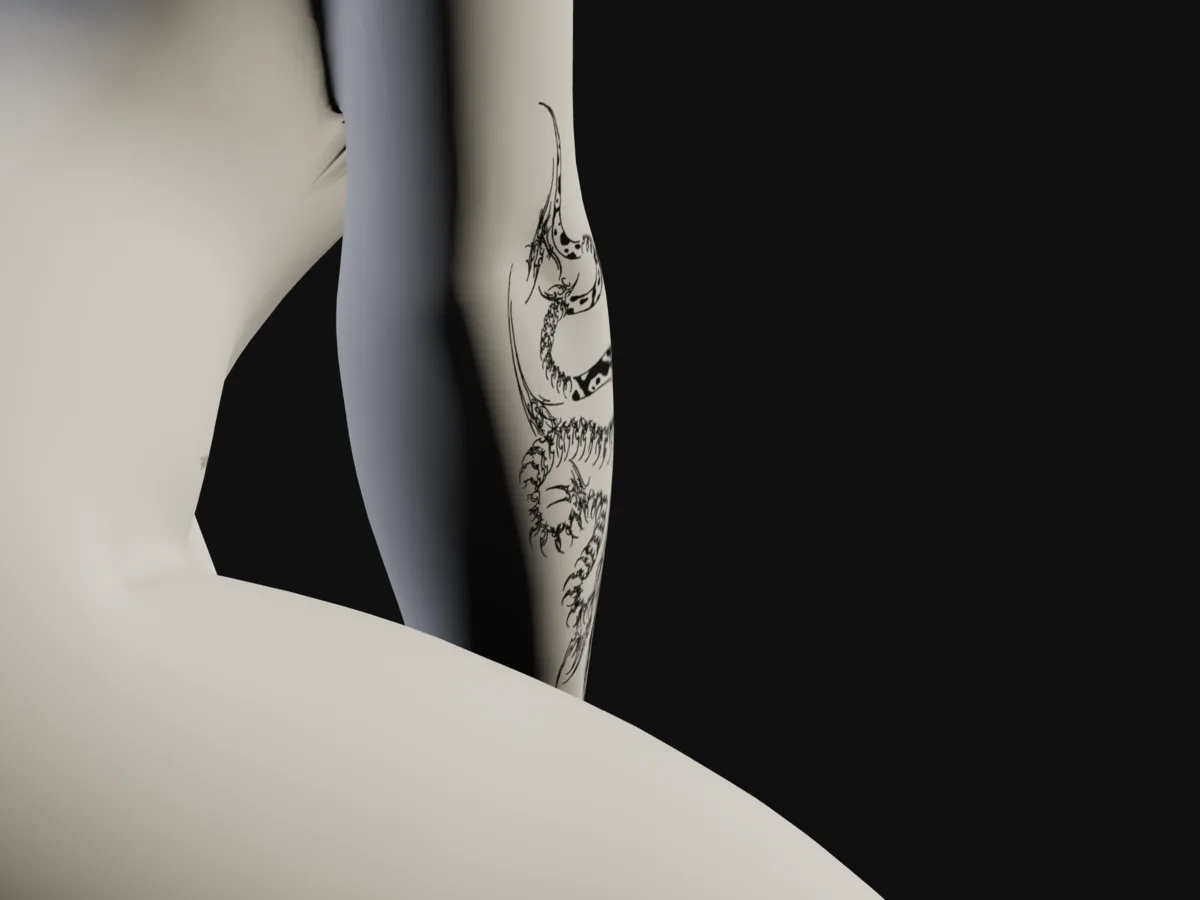
Size and placement are the two regrets you can test before you talk to an artist. In plan.tattoo you put your design on a 3D plaster cast of a body, type its size in centimetres, and turn the cast to see it from the front, the side and behind. You can move it a little higher or lower, change the size, try it on a male or female cast, and save a picture to take to the consultation. It runs free in the browser and needs no photo of you.
The casts are plaster-coloured, so they won't show your own skin tone or body shape, but they do show how big a design is at a given number of centimetres and how it sits on the curve of an arm, a calf or a back. There is more on how this works in the 3D tattoo visualizer guide.
Questions
What should I know before my first tattoo?
Choose the artist by healed work in the style you want, check that the studio is licensed, and read its deposit rules. Decide the size and placement before the consultation and bring your questions. On the day, eat, sleep and drink water, skip alcohol, and wear loose clothes that reach the area. Afterwards, follow your artist's aftercare.
What is the best place for a first tattoo?
The outer forearm, upper arm, calf and outer thigh are common choices. Healthline lists them among the areas with low to moderate pain, they have more padding and fewer nerve endings than bony areas, and they are easy to cover with clothes. Pick a spot without moles, since a tattoo can hide early signs of skin cancer.
What questions should I ask at a tattoo consultation?
Ask to see healed work in your style and at your size, how the artist would change the design so it ages well, whether your size and placement suit it, how many hours and sessions it needs, the rough price, the deposit and rescheduling rules, when you will see the final drawing, which medicines to avoid beforehand, and what aftercare they recommend.
Should I drink alcohol before getting a tattoo?
No. Studio guides ask you to skip alcohol before the appointment and to arrive rested, fed and well hydrated. Aspirin and ibuprofen can also thin the blood, so ask your artist about them first, and never stop a prescribed medicine without asking whoever prescribed it.
How long does a first tattoo take to heal?
The redness, itching and peeling usually pass within about four weeks. Cleveland Clinic says the top layer is usually healed by about two months, while the deeper layers can take several more months, and Healthline says full healing can take up to six months. Keep it out of baths, pools and direct sun until it has healed.
Sources: NHS: Hepatitis C, causes · Cleveland Clinic: tattoo aftercare · American Academy of Dermatology: caring for tattooed skin · Healthline: tattoo healing process · Healthline: tattoo pain chart · Think Tank Tattoo: your first tattoo appointment · Speakeasy Custom Tattoo: frequently asked questions · Medical News Today: Do tattoos hurt? · Saniderm: Detailed tattoo pain chart · Ray Studios: placement mistakes that speed up fading · Sydney Tattoo Convention: tattoo size and body part guide
Open the planner, add your design, type the size you have in mind and turn the cast before you book.