Tattoo placements that age best
by moiraiDigital · updated
The outer thigh and upper back age best: they move little and stay out of the sun. The forearm, upper arm, calf and chest come next. Wrists, ankles, hands and fingers fade or blur fastest, from constant movement, rubbing and washing. Wherever a tattoo goes, sunscreen on it once healed slows the fading.
Every tattoo softens over the years, but not at the same pace everywhere. This page ranks twelve places by how well a tattoo there lasts, says why, and gives the sizes studio guides suggest, since a design that is too small for its spot blurs sooner.
Where do tattoos last the longest?
On the outer thigh and the upper back. Ray Studios names both as the places that hold up best, because they have little movement and little exposure: clothes keep the sun off, and the skin doesn't bend or rub much. The forearm, upper arm, calf and chest follow, each with sun or stretch against it.
How we ranked them
Ranked by how well a tattoo there lasts, then by pain; within a tie, our pick. A place "ages well" where a studio guide names it among those that hold up best, "poorly" where it names it among those that fade fastest, and "fair" covers everything between. Pain follows our tattoo pain chart.
| # | Placement | Why | Size | Pain | How it ages | Visibility | |
|---|---|---|---|---|---|---|---|
| 1 | Outer thigh | little sun under clothes, and little movement | 12–20 cm (4.7–7.9 in) | lower | well | low; trousers hide it, shorts show it | open it on the planner |
| 2 | Upper back | little movement and little sun | 10–20 cm (3.9–7.9 in) | moderate | well | low; hidden by any top | open it on the planner |
| 3 | Forearm | the outer side catches the sun | 10–15 cm (3.9–5.9 in) | lower | fair | high; short sleeves show it | open it on the planner |
| 4 | Upper arm | can stretch with muscle or weight | 8–15 cm (3.1–5.9 in) | lower | fair | medium; a T-shirt sleeve covers most of it | open it on the planner |
| 5 | Calf | legs catch summer sun | 8–15 cm (3.1–5.9 in) | lower | fair | medium; shorts and skirts show it | open it on the planner |
| 6 | Chest | can stretch with weight change | 10–15 cm (3.9–5.9 in) | moderate | fair | low; most shirts cover it | open it on the planner |
| 7 | Collarbone | open necklines let the sun in | 3–5 cm (1.2–2 in) | higher | fair | medium; open necklines show it | |
| 8 | Spine | covered by clothes most of the time | 13–20 cm (5.1–7.9 in) | highest | fair | low; hidden by clothes | open it on the planner |
| 9 | Wrist | a joint always moving and on show | 2–6 cm (0.8–2.4 in) | higher | poorly | high; hard to cover | |
| 10 | Ribs | thin skin that moves with breathing; heals delicately | 10–20 cm (3.9–7.9 in) | highest | poorly | low; hidden by clothes | |
| 11 | Ankle | rubbed by shoes and socks | 2–7 cm (0.8–2.8 in) | highest | poorly | medium; socks and trousers cover it | |
| 12 | Hands and fingers | constant use and washing | 2–3 cm (0.8–1.2 in) | highest | poorly | high; always on show |
Why do some placements fade faster?
Four things wear a tattoo down, by Ray Studios' account. Sun breaks down the ink, so forearms, legs and the nape fade first. Constant movement at joints such as wrists, elbows, knees and ankles widens the lines. Rubbing and washing wear hands and feet. Stretch from weight or hormonal change distorts the hips, thighs, stomach, chest and arms.
Thin skin plays a part too. On the fingers, hands and feet, Ray Studios says, ink can migrate, fade or spread more easily, which is why fine lines there soften first and these spots need touch-ups most often. The ribs heal more delicately for the same reason, though they are covered and move less than a joint.
Placements that last, one by one
Outer thigh
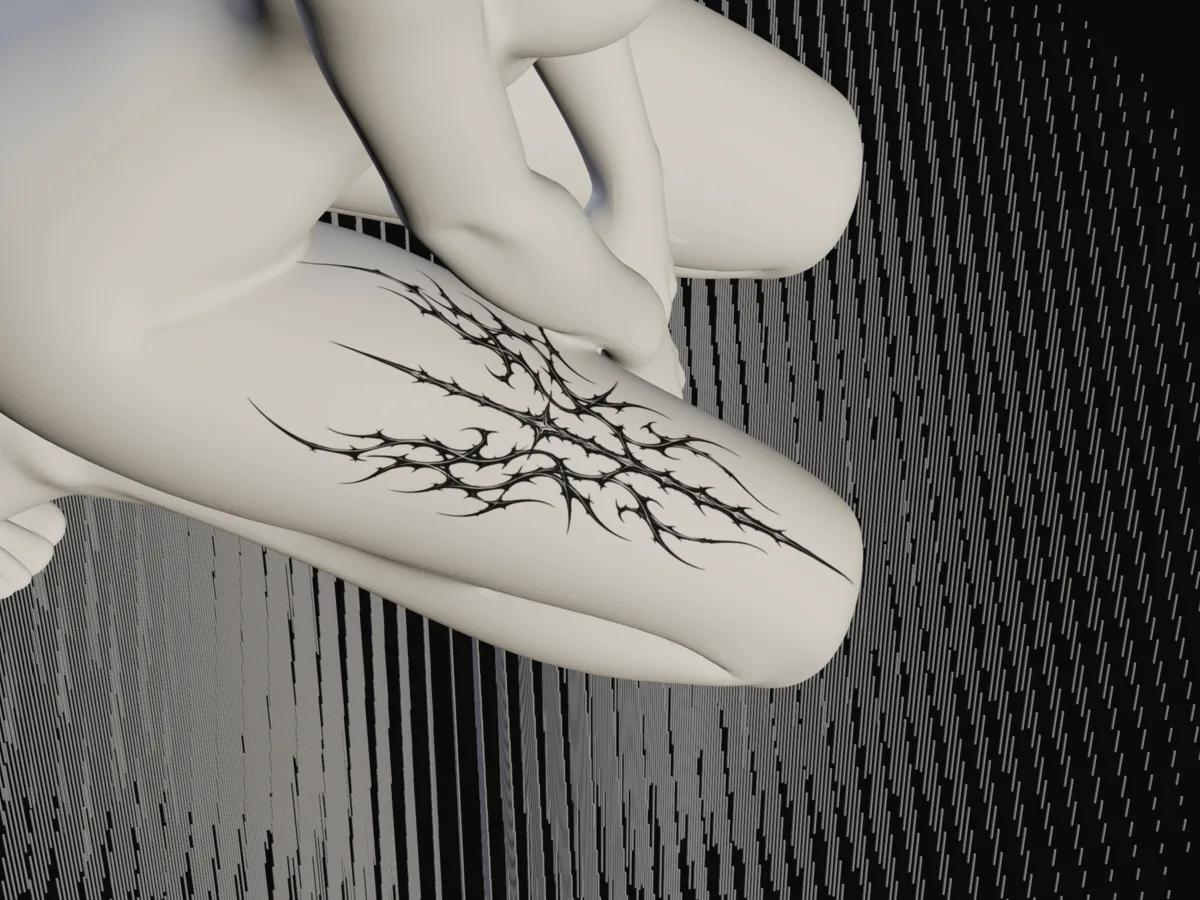
The outer thigh has muscle under it and clothes over it, and bends little, so it escapes most of that wear. It is also among the least painful places to sit for a tattoo. A typical piece runs 12–20 cm (4.7–7.9 in). The inner thigh is different: it rubs, and hurts more. More on thigh tattoos.
Upper back
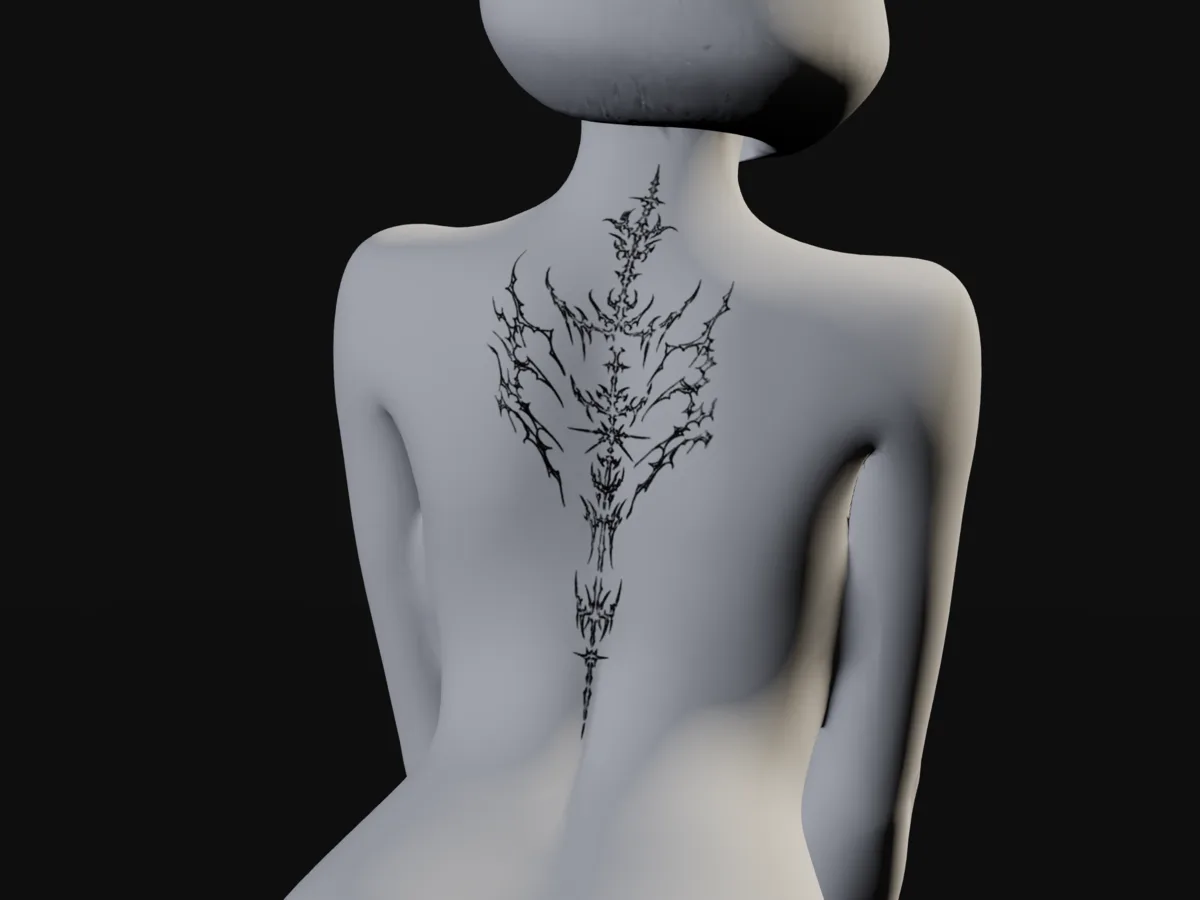
Covered by any top and with little movement, the upper back keeps a design sharp for a long time. It hurts more over the shoulder blades and the spine. Pieces here run 10–20 cm (3.9–7.9 in), with space for detail that would blur at a smaller size. More on back tattoos.
Forearm and calf
Both hold a design well against movement, but both catch the sun: the outer forearm most of the year, the calf in summer. Sunscreen on the healed tattoo is what keeps them in the upper half of this list. Forearm and calf pages have more.
Upper arm and chest
Usually covered, so the sun does little harm, but both can stretch with big changes in muscle or weight, which bends straight lines and circles. A looser, organic design takes that better than a geometric one. Upper arm and chest pages have more.
How do I keep a tattoo from fading?
Pick a spot with little sun and little movement, give the design enough size for its detail, and put sunscreen on it once it has healed, since UV breaks down the ink. Spots that rub or bend all day, such as hands, feet, wrists and ankles, will still need touch-ups sooner than a back or a thigh.
Size is the part you can plan before the appointment. In plan.tattoo, add your design, type its size and turn a 3D body to see whether the detail still reads at that size. Open the planner and try 12 cm on the thigh. It is free in the browser, with no account or photo of you. The placement guide also ranks every spot by pain, and the size chart gives typical sizes for more areas.
Questions
Which tattoo placements fade the fastest?
Hands, fingers and feet, then wrists and ankles. Studio guides put it down to thin skin, constant movement, rubbing from shoes and straps, and frequent washing. Fine lines there soften soonest, and touch-ups come round more often than on covered, still areas like the back or thigh.
Do thigh tattoos age well?
On the outer thigh, yes: it is one of the two places studio guides name as holding a tattoo best, with the upper back. Clothes keep the sun off and the skin moves little. The inner thigh rubs when you walk, so it wears faster and hurts more to tattoo.
Does sunscreen stop a tattoo fading?
It slows it. UV light breaks down tattoo ink, so a healed tattoo that sees the sun, on a forearm, a calf or the back of the neck, lasts longer with sunscreen on it. Keep a new tattoo out of the sun altogether until it has healed.
Sources: Healthline: Tattoo pain chart · Medical News Today: Do tattoos hurt? · Saniderm: Detailed tattoo pain chart · Ray Studios: placement mistakes that speed up fading · Sydney Tattoo Convention: tattoo size and body part guide · Bosphorus Ink: tattoo size and placement guide