Tattoo pain chart: where it hurts most and least
The ribs, spine, armpits, feet, ankles, hands and the head usually hurt most, because bone sits close under thin skin or the area is packed with nerve endings. The outer thigh, calf, forearm, outer upper arm and shoulder usually hurt least, since muscle and fat pad them. How long you sit counts for a lot too.
Why some places hurt more
A tattoo needle puts ink into the dermis, the second layer of skin, and the dermis holds nerves and blood vessels. That is why it hurts and why it bleeds a little. How much it hurts depends on what lies under that layer.
Medical guides give the same three reasons. Healthline says the most painful places are those with the least fat, the most nerve endings and the thinnest skin, and that bony areas usually hurt a lot. Medical News Today names a higher density of nerve endings, a major nerve running close by, and thin skin with little fat. Where the needle has a cushion of muscle or fat under it, most people find it easier.
The tattoo pain chart
The four bands are our summary of Healthline's chart and Medical News Today's article. They are not measured scores, and no study has given each body part a number that holds up. Both guides lump their painful areas together, so the split between higher and highest is our judgement: highest is for places with bone or dense nerves right under thin skin that both guides name. Where only one guide rates an area, the row says so.
| Body area | Pain | Why |
|---|---|---|
| Outer thigh | lower | Thick muscle and some fat between the needle and the bone. |
| Calf | lower | Padded by muscle; Healthline puts it in its low to moderate group. |
| Forearm (outer) | lower | Some padding and fewer nerve endings than the inner wrist. |
| Outer upper arm and shoulder | lower | Muscle and fat cover the bone; both guides list it as less painful. |
| Buttocks | lower | Medical News Today lists it with the fleshier, less painful spots. |
| Upper and middle back | moderate | Padded away from the spine; it gets bonier towards the shoulder blades. |
| Chest | moderate | Padded over the muscle, bonier over the breastbone in the middle. |
| Stomach | higher | Healthline rates it high for its nerve endings; Medical News Today does not rate it either way. |
| Inner upper arm | higher | Thin skin and many nerve endings. |
| Neck | higher | Nerve endings close to the surface and bone at the back. |
| Collarbone | higher | Bone just under the skin; Saniderm calls it "quite unpleasant". |
| Wrist | higher | Thin skin with bone right under it. |
| Inner thigh and groin | higher | Many nerve endings in thin skin. |
| Elbow | higher | Bone directly under the skin, inside and out; listed by Healthline. |
| Knee and the back of the knee | higher | Bone close under the skin; Healthline counts the back of the knee as well. |
| Shin | highest | Bone right under the skin with little fat. |
| Hands and fingers | highest | Thin skin, bone close under it and dense nerve endings. |
| Feet, ankles and toes | highest | Bone close under thin skin. |
| Head and face | highest | Bone of the skull just under the skin and many nerves. |
| Spine | highest | The needle runs over the bony ridge of the vertebrae. |
| Ribs | highest | Little fat or muscle between thin skin and bone. |
| Armpit | highest | Thin skin and many nerve endings. |
| Nipple and areola | highest | Very many nerve endings; listed by Healthline. |
Read the chart with three caveats
First, pain is personal. Healthline says your own tolerance and the location both decide how much it hurts, and that an artist who is new or heavy handed can make any spot sharper. Medical News Today adds that some people mind the outline more and others the shading.
Second, the chart is anecdote. Medical News Today says plainly that claims about which spots hurt most come from personal experience, not scientific evidence. The one large study we could open found something that cuts against every pain chart. Witkoś and Hartman-Petrycka asked 1,092 tattoo clients in Poland to rate their pain from 0 to 10. In their statistical model, the body area of the tattoo did not significantly predict how much it hurt, during the session or afterwards. Their sample was mostly women and covered broad areas (arms, legs, torso, neck), so it does not settle the question for the ribs against the forearm, but it is a good reason to hold any ranking loosely. The study also found no difference between women and men in pain during tattooing; the best tattoo placements for women and for men build on that.
Third, session length matters more than people expect. In the same study, the time the tattoo took was one of the factors that did predict pain, along with bleeding and how stressed people felt. Healthline makes the same point: longer sessions, the kind large and detailed pieces need, hurt more, and an artist may split big work into sittings of two or three hours. In that study, men's sessions ran longer, and the sexes reported about the same pain during tattooing, while women reported a little more once it was over.
Forearm, ribs, spine and calf compared
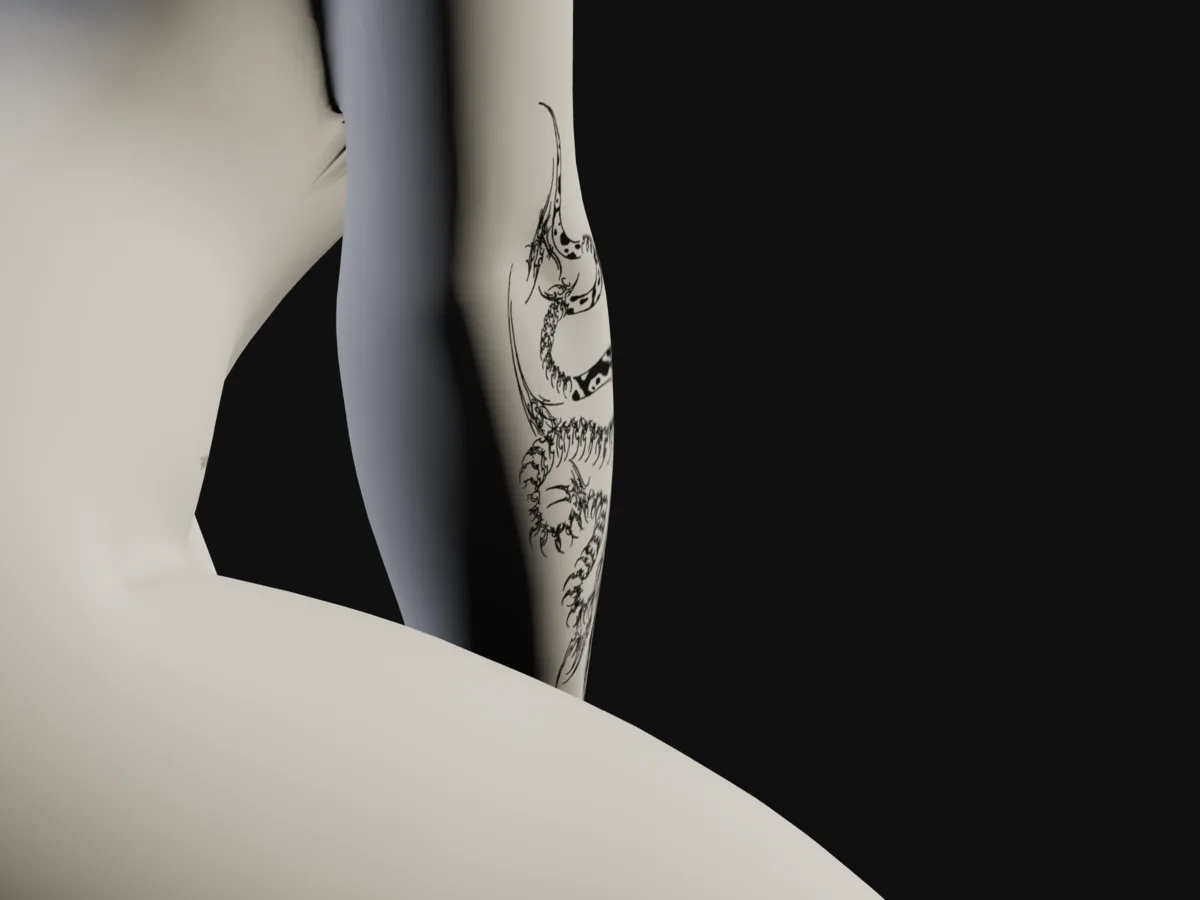
A forearm tattoo hurts less than one in most other places. The outer forearm has some padding and both guides list the forearm with the less painful areas. It gets sharper towards the wrist, the elbow and the inner arm, where the skin is thinner. A design that stays on the outer, upper part of the forearm avoids most of that. The forearm placement page shows how sizes fit there.
The ribs are on almost every list of the worst spots. Healthline puts the rib cage in its high to severe group because the bone is so close, and Healthline's article on whether tattoos hurt names the ribs as a more sensitive area. Rib pieces also tend to be large, which means long sittings on a sensitive spot. See the ribs placement page for the shape of the area.
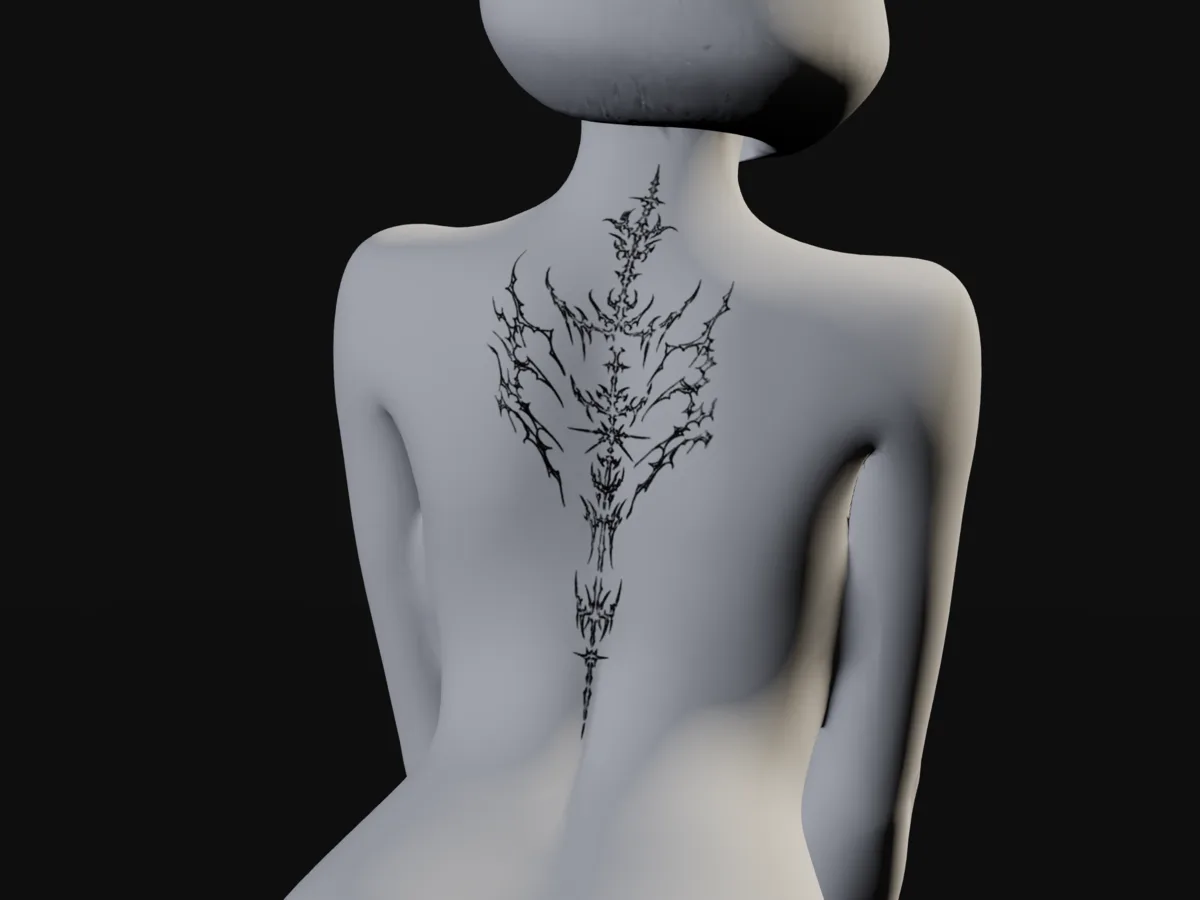
A spine tattoo usually hurts too. Both guides list the spine as painful, and Healthline gives nerve endings and closeness to bone as the reasons. The muscle either side of the spine is easier than the bony line down the middle, so a design that runs straight down the vertebrae spends all its time on the hardest part. The spine placement page has more on long, narrow designs.
On the leg, the back of the calf is one of the easier places, padded by a large muscle. The shin at the front is the opposite, bone right under the skin. A calf design that wraps round to the front will move from one to the other. The calf placement page shows the area.
Choosing a less painful spot for a first tattoo
If pain worries you, the easiest first tattoo is a small or medium design on a padded area: the outer upper arm, the shoulder, the outer forearm, the calf or the outer thigh. Each of these sits in the lower band of the chart, and each can be covered by a sleeve or trousers when you need it to be. The first tattoo guide goes through the rest of that decision, and the tattoo placement guide compares the areas for how they look and how they show.
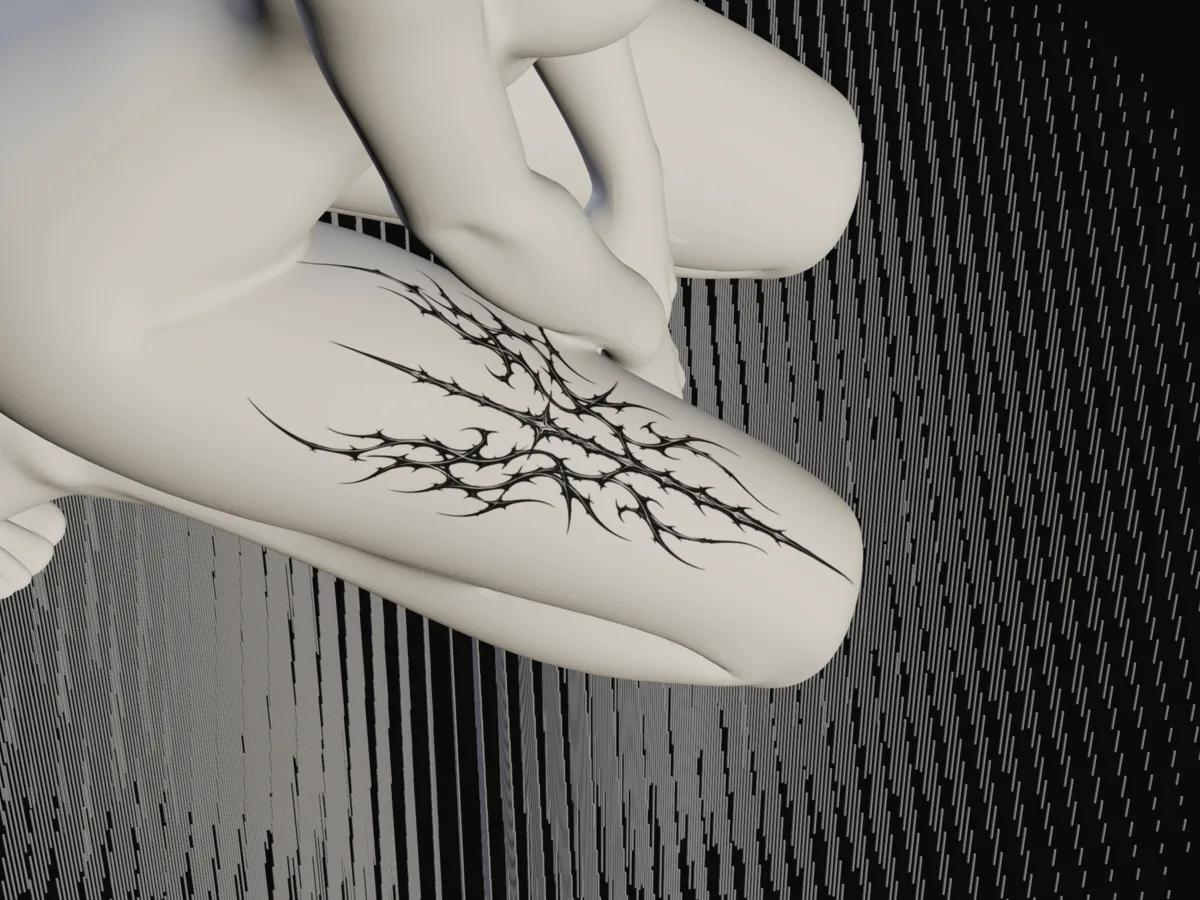
Size counts as much as place. A smaller piece takes less time, and Medical News Today notes that smaller tattoos often take less time and so cause less pain.
For the day itself, Healthline suggests sleeping well, eating a meal first, avoiding alcohol and skipping aspirin or ibuprofen for 24 hours beforehand. Music helps some people, and a good artist will let you take breaks.
On numbing creams, ask your artist before you buy anything. Some artists won't work over them: a tattoo supply company writes that some studios decline clients who have put numbing cream on before arriving, or won't tattoo over third-party products they don't know. Medical News Today suggests a patch test about 24 hours before, since some people react to the cream. In March 2024 the US FDA warned against over-the-counter numbing products with more than 4% lidocaine, and against putting them on heavily, over large areas or under a wrap.
Plan it before you sit
Most of what decides how a tattoo will feel is fixed before the needle starts: the place and the size. Both are easier to settle at home than in the chair.
plan.tattoo puts your design on a 3D plaster cast of a body at the size you type in cm. You can turn the cast, move the design from the ribs to the outer arm, and try several sizes until you find the smallest one that still reads well. A smaller design on a padded spot is a shorter session. You don't need a photo of yourself, and you can save a picture of the plan to show your artist without an account. The casts are plaster coloured and come in several builds, including a multisize man and curvy woman, but they don't show your own skin tone or body shape. The tattoo size chart lists common sizes in centimetres.
Questions
What is the most painful place to get a tattoo?
The ribs, spine, armpits, hands, feet, ankles and head appear on most lists of the worst spots, because bone sits close under thin skin or the area has many nerve endings. These rankings come from people's experience. One study of 1,092 tattoo clients found that the body area did not significantly predict pain, while the length of the session did.
What is the least painful place to get a tattoo?
Areas padded by muscle and fat usually hurt least: the outer thigh, the calf, the outer forearm, the outer upper arm and the shoulder. Healthline and Medical News Today both list these among the less painful places. Your own tolerance, the artist and the length of the session still change how it feels.
Does a forearm tattoo hurt?
Less than most places. The outer forearm has some padding and is listed by medical guides among the less painful areas. It gets sharper near the wrist, the elbow and on the inner arm, where the skin is thinner and bone or nerves sit closer.
Does session length make a tattoo hurt more?
Yes. In a study of 1,092 tattoo clients, the time the tattoo took was one of the factors that predicted pain, with bleeding and stress. Healthline also says longer sessions hurt more and that big pieces are often split into sittings of two or three hours. Choosing a smaller size is one way to keep a session short.
Can I use numbing cream for a tattoo?
Ask your artist first. Some artists won't work over numbing cream, or only over a product they supply. Medical News Today suggests a patch test about 24 hours before, and in 2024 the US FDA warned against over-the-counter numbing products with more than 4% lidocaine and against applying them heavily or under a wrap.
Sources: Healthline: Tattoo pain chart · Healthline: Do tattoos hurt? · Medical News Today: Do tattoos hurt? · Saniderm: Detailed tattoo pain chart · Witkoś and Hartman-Petrycka (2020), Gender differences in subjective pain perception during and after tattooing, International Journal of Environmental Research and Public Health (full text, Europe PMC) · Drug Topics: FDA warns consumers about unapproved, misbranded OTC analgesic products · Tommy's Supplies: Does numbing cream affect tattoo quality?
Open the planner, put a design on the outer forearm, then move it to the ribs and compare the size each place needs.