Best tattoo placements for women
by moiraiDigital · updated
The outer thigh, upper arm and upper back rank best for women: they hurt least and hold a tattoo well. Saniderm's chart says women usually find the chest less painful than men do. In a study of 1,092 people, women and men felt the same pain during tattooing; women felt slightly more afterwards.
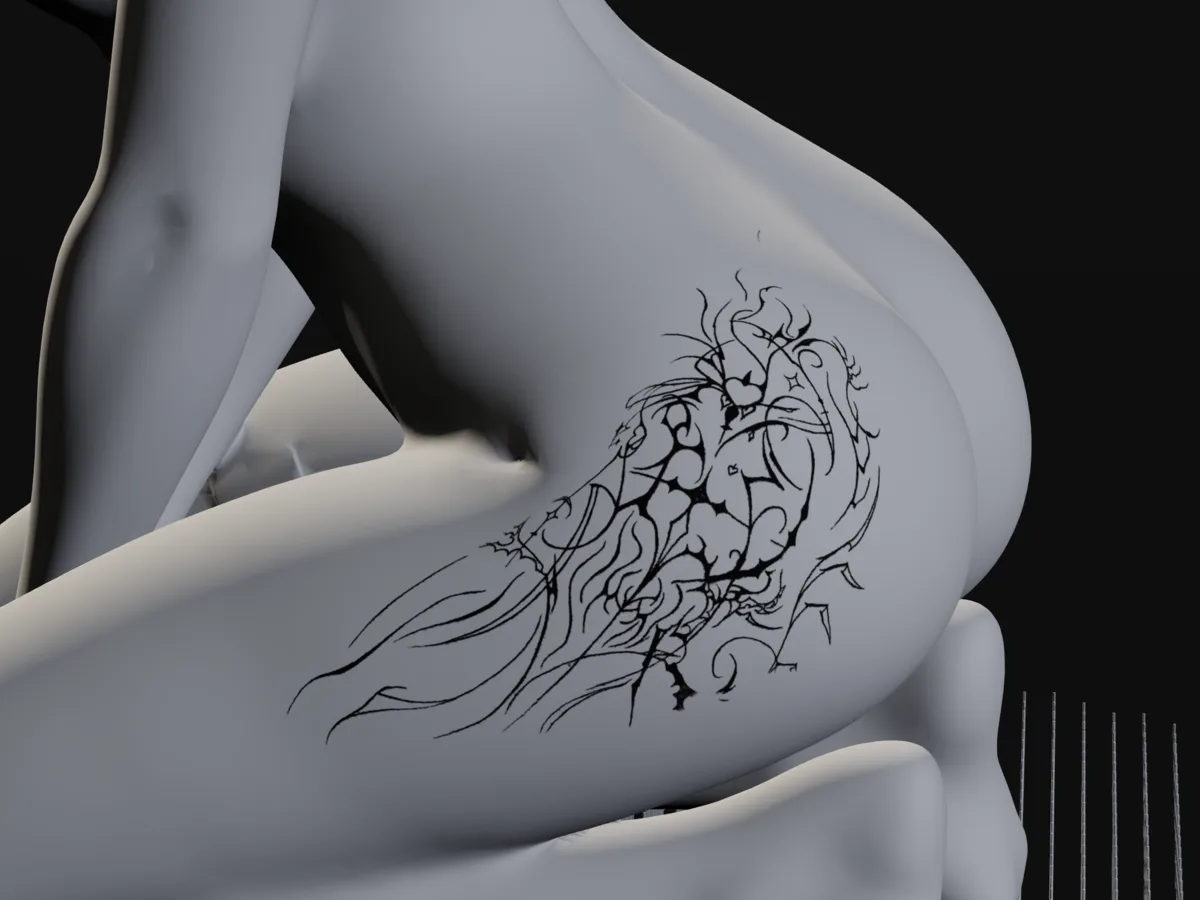
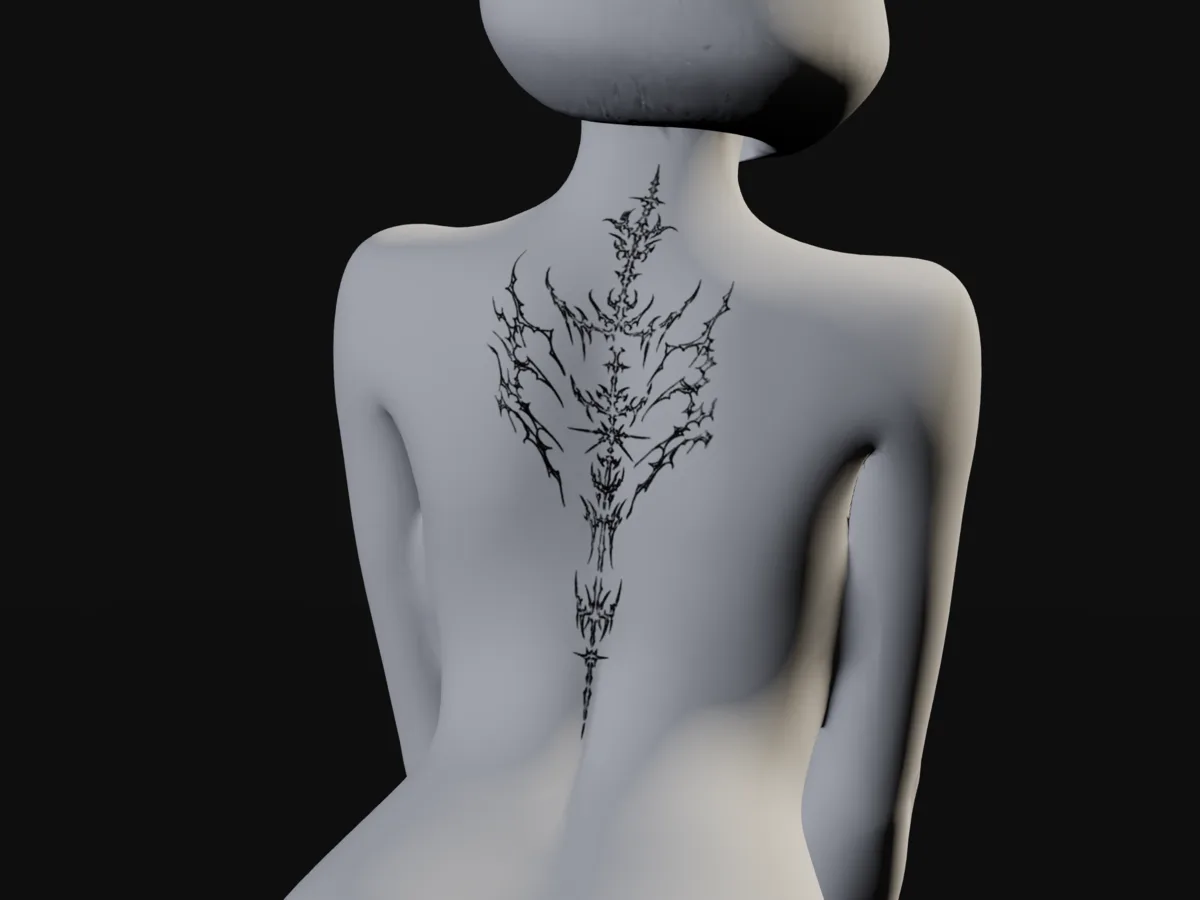
This list covers the places women most often ask about, from a wide piece across the back to a few centimetres on the collarbone, and ranks them the way the pain chart and the studio guides on aging do. The two pictures show pieces placed on a kneeling plaster cast, at the sizes in their captions.
Where should a woman get a tattoo?
For a first or a larger piece, the outer thigh: it hurts among the least, holds a tattoo well and leaves room for a wide design. The upper arm and upper back come next. Small pieces suit the collarbone, wrist or ankle, though those hurt more and the wrist and ankle fade sooner.
How we ranked them
Ranked by pain, as the pain chart rates each place, then by how well it ages; within a tie, our pick. Pain comes from Healthline, Medical News Today and Saniderm, as on our tattoo pain chart. "Ages well" means a studio guide names the place among those that hold up best, "poorly" among those that fade fastest. Sizes are what studio size guides give as typical.
| # | Placement | Why | Size | Pain | How it ages | Visibility | |
|---|---|---|---|---|---|---|---|
| 1 | Outer thigh | room for a large or wide piece, and among the least painful | 12–20 cm (4.7–7.9 in) | lower | well | low; trousers hide it, shorts show it | open it on the planner |
| 2 | Upper arm | padded, and a sleeve covers it | 8–15 cm (3.1–5.9 in) | lower | fair | medium; a T-shirt sleeve covers most of it | open it on the planner |
| 3 | Upper back | wide and flat for a symmetrical piece; holds up well | 10–20 cm (3.9–7.9 in) | moderate | well | low; hidden by any top | open it on the planner |
| 4 | Chest | Saniderm says women usually find it less painful than men do | 10–15 cm (3.9–5.9 in) | moderate | fair | low; most shirts cover it | open it on the planner |
| 5 | Collarbone | a fine line along the bone; bony, so it stings | 3–5 cm (1.2–2 in) | higher | fair | medium; open necklines show it | |
| 6 | Wrist | small and on show; fades sooner than most | 2–6 cm (0.8–2.4 in) | higher | poorly | high; hard to cover | |
| 7 | Spine | a long, narrow line down the back, over bone | 13–20 cm (5.1–7.9 in) | highest | fair | low; hidden by clothes | open it on the planner |
| 8 | Ribs | long pieces fit the side; among the most painful | 10–20 cm (3.9–7.9 in) | highest | poorly | low; hidden by clothes | |
| 9 | Ankle | a tiny piece; shoes and socks rub it | 2–7 cm (0.8–2.8 in) | highest | poorly | medium; socks and trousers cover it |
Does a tattoo hurt more for women?
Not during it, by the largest study we found. Witkoś and Hartman-Petrycka asked 1,092 people, 863 of them women, and found no difference between women and men in pain while being tattooed: 4.31 against 4.48 out of 10. Straight afterwards women rated the pain a little higher, 2.15 against 1.76.
The same study found women chose the torso more often than men (35% against 21%) and the arms less often (42% against 57%). The charts put the difference in the spot instead, thin skin over bone hurting more for anyone, though in this study the broad areas (arms, legs, torso) did not predict pain either. Saniderm's chart adds one difference by sex, for the chest, where it says women usually have more padding.
The top five, one by one
Outer thigh
Thick muscle and some fat sit between the needle and the bone, so it is among the least painful places on every chart we read. It also ages among the best, because clothes keep the sun off and it moves little. It is wide enough for a large or round design, typically 12–20 cm (4.7–7.9 in), and shorts or a skirt decide who sees it. More on thigh tattoos.
Upper arm
The outer upper arm and shoulder are padded and rated low for pain; the inner arm is a different story, thin and sensitive. A T-shirt sleeve covers most of it. It can stretch with big changes in weight or muscle. Typical sizes run 8–15 cm (3.1–5.9 in). More on upper arm tattoos.
Upper back
It hurts more over the shoulder blades and much more over the spine, and less on the fleshy parts between. Studio guides name it with the outer thigh as the place a tattoo holds up best. A piece here is usually 10–20 cm (3.9–7.9 in), and any top hides it. More on back tattoos.
Chest
Guides disagree on the chest, which is why our chart rates it moderate. It is padded over the muscle and bony over the breastbone in the middle, and Saniderm says women usually find it less painful than men do. Weight change or pregnancy can stretch the skin here. Typical pieces run 10–15 cm (3.9–5.9 in) on one side. More on chest tattoos.
Collarbone
A line of script or a fine design along the collarbone is a common small piece, typically 3–5 cm (1.2–2 in). The bone sits just under the skin, so it stings; Saniderm calls the area "quite unpleasant". Open necklines show it, and let the sun in.
Which placements change with pregnancy or weight?
The stomach, hips, thighs, chest and arms, where Ray Studios says weight or hormonal changes can stretch or shrink the skin and distort a design. Geometric work shows it most, since a straight line or a circle makes any stretch obvious. A looser, organic design hides it better.
Small pieces on the wrist and ankle are popular for being easy to show, but both are joints in constant movement, and the ankle rubs on shoes and socks; studio guides list them with the hands and feet as the spots that fade fastest. Ribs and spine work for long designs and hide under clothes, at the cost of being among the most painful places.
See it at its size before you book
Sizes in a table are hard to picture. In plan.tattoo you can add your design, type its size in centimetres and turn a 3D body to see it from the front, the side and the back, free in the browser with no account. Open the planner and try 10 cm on the upper back. Then measure the spot on yourself with a tape before you agree a size with your artist. The tattoo size chart gives sizes for more areas, and the men's list is in best tattoo placements for men.
Questions
What is the least painful place for a woman to get a tattoo?
The outer thigh, the outer upper arm and shoulder, the outer forearm and the calf, where muscle and fat pad the bone. Pain during tattooing doesn't differ between women and men in the largest study we found, so the same chart applies. Saniderm says women usually find the chest less painful than men do.
Where do women usually get tattoos?
In a Polish study of 1,092 tattooed people, 42% of the women had chosen the arms and 35% the torso, against 57% and 21% for men. Studio size guides list the collarbone, wrist and ankle among the small placements.
What is a good small tattoo placement for women?
The collarbone suits a piece of 3–5 cm (1.2–2 in), the wrist 2–6 cm (0.8–2.4 in) and the ankle 2–7 cm (0.8–2.8 in), by studio size guides. All three hurt more than padded areas, and the wrist and ankle fade sooner, so keep the lines simple and not too fine.
Sources: Healthline: Tattoo pain chart · Medical News Today: Do tattoos hurt? · Saniderm: Detailed tattoo pain chart · Ray Studios: placement mistakes that speed up fading · Sydney Tattoo Convention: tattoo size and body part guide · Bosphorus Ink: tattoo size and placement guide · Witkoś and Hartman-Petrycka (2020), Gender differences in subjective pain perception during and after tattooing, International Journal of Environmental Research and Public Health