How to plan a tattoo
updated
Planning a tattoo comes down to three decisions made in order: the design, its size, and where it goes. Settle the design first, then find the size at which its detail will still read in ten years, then try it on the body to see how that size sits on the curve of the arm, back or leg. Bring all three to your artist, with measurements in centimetres.
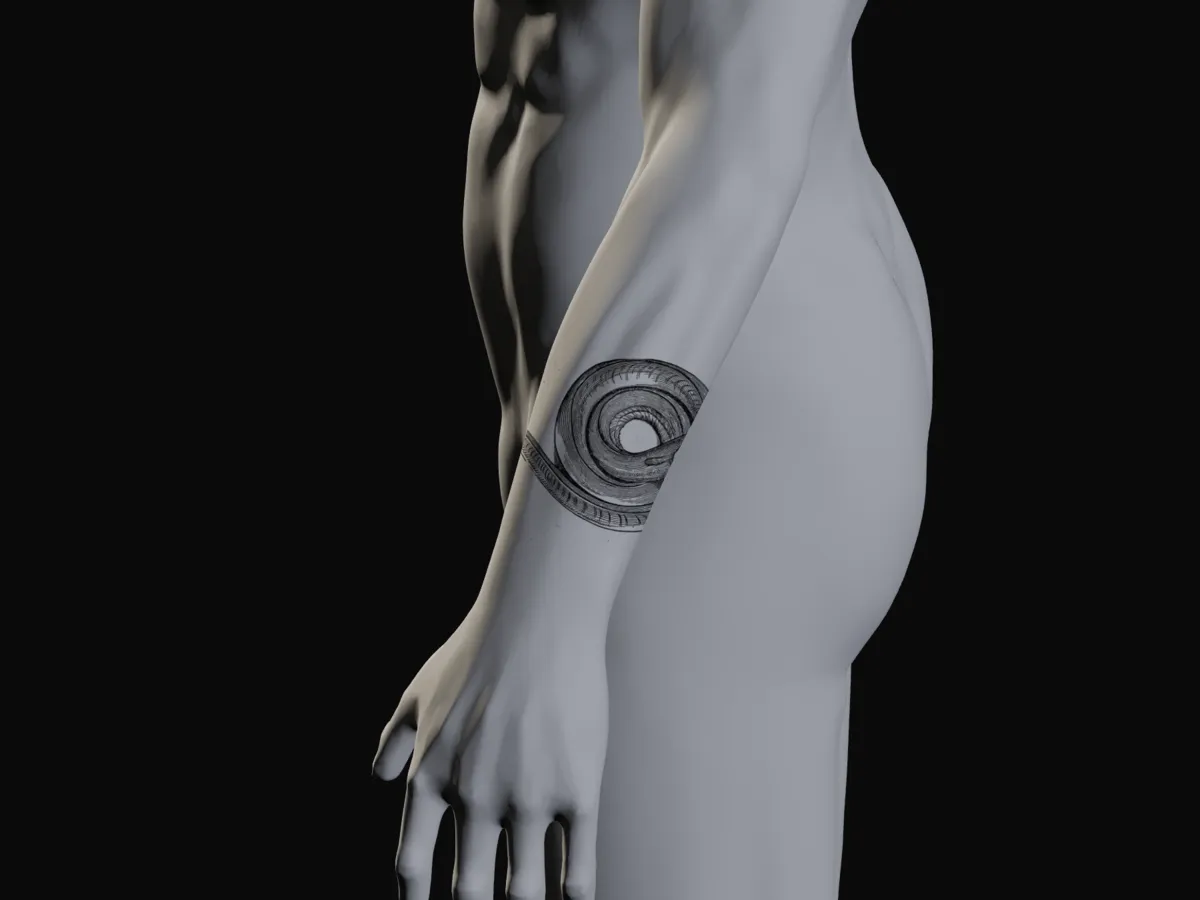
1. Choose the design (and what will survive at size)
Collect references, then pick one piece. Line work and bold shapes hold up best over time. Fine detail, small text and lines drawn very close together blur as the ink settles. Studios advise keeping lettering at least about 4 mm tall and leaving clear space between lines, because lines thicken a little as a tattoo ages. If your reference is a photo or a screenshot, plan.tattoo lifts the background off, so you can see the linework alone.
2. Decide the size in centimetres
Size is given as the length of the design's longest side. Pick it from the area you have in mind, not from the picture on your screen: a design that looks bold at full screen can be 6 cm on a wrist. The tattoo size chart gives typical sizes for each placement.
3. Test the placement on a body
A flat print-out can't show how a piece wraps the forearm or follows the spine. Put the design on a 3D body, turn it to follow the muscle, and look at it from the front, the side and behind. Try the same piece on a different body type: the placement guide explains how each area reads.
4. Plan for the pieces that come next
If you want more tattoos later, leave room for them. Decide now which areas stay free, and which way the next piece would flow from this one.
5. Brief your artist
Bring the design, the size in cm, a front and side view of the placement, and any spot you want to avoid. Artists redraw for skin and will adjust; a clear brief means the consultation starts from your decision, not from scratch.
Sources: Vatican Tattoo Studio: why micro tattoos blur · Think Tank Tattoo: script tattoos, a practical guide · Black Hat Tattoo: how small can lettering go