Japanese tattoo style: prints, bodysuits and a ban
The Japanese tattoo style, called irezumi or wabori, covers large areas of the body with a single picture: a main subject such as a dragon or a koi, flowers, and a background of wind, water and cloud. It took shape in nineteenth-century Edo, after a set of woodblock prints of tattooed heroes went on sale.
Edo, 1827: a set of prints
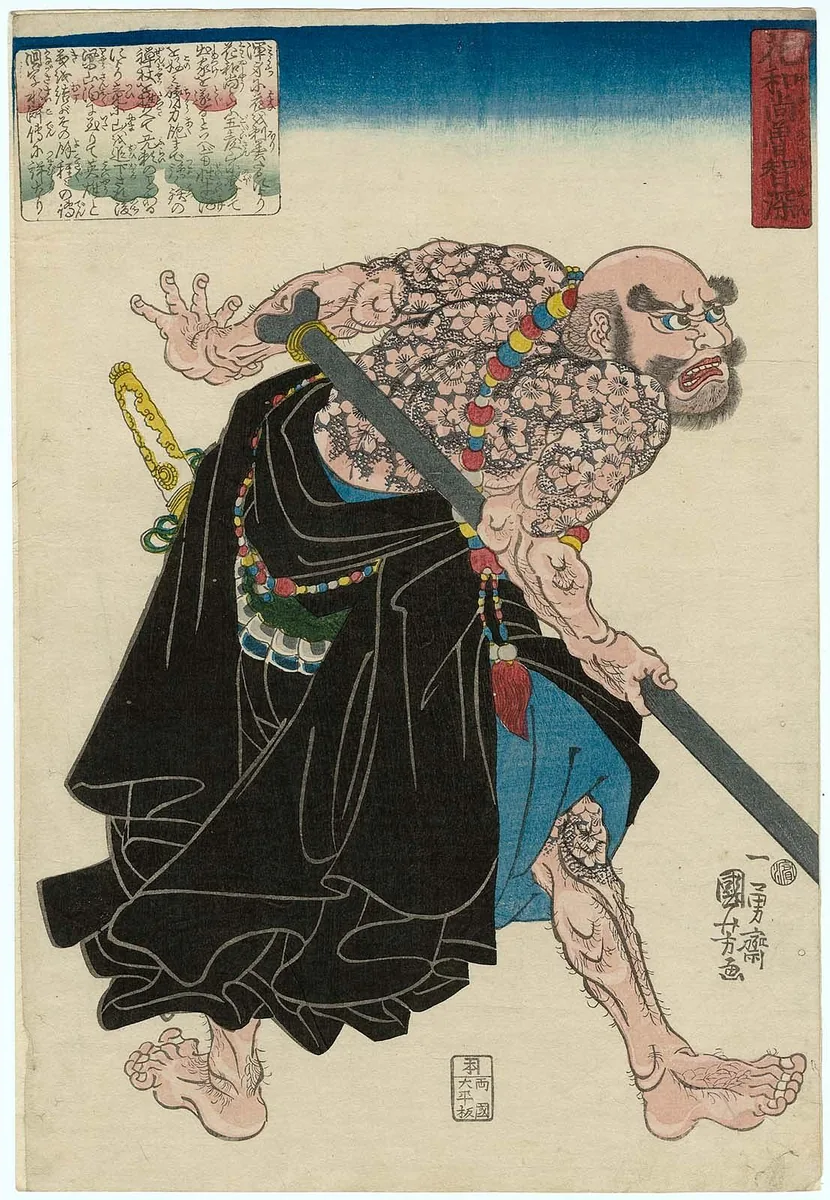
In 1827 Utagawa Kuniyoshi, a print artist who had been short of work, received his first big commission. He was to draw the heroes of a Chinese novel, the Water Margin, known in Japan as the Suikoden. The book follows a hundred and eight rebels and outlaws who stand up to corrupt officials, and the series, One Hundred and Eight Heroes of the Popular Suikoden, came out between 1827 and 1830.
Kuniyoshi covered his heroes in dragons, tigers and peonies, and he tattooed more of them than the novel ever describes. The prints sold well. Tattooers say that Edo, the city now called Tokyo, wanted to look like them, and that a fashion for large tattoos followed. The link between the prints and the fashion is oral tradition among tattooers, so it is told as legend.
Who wore them
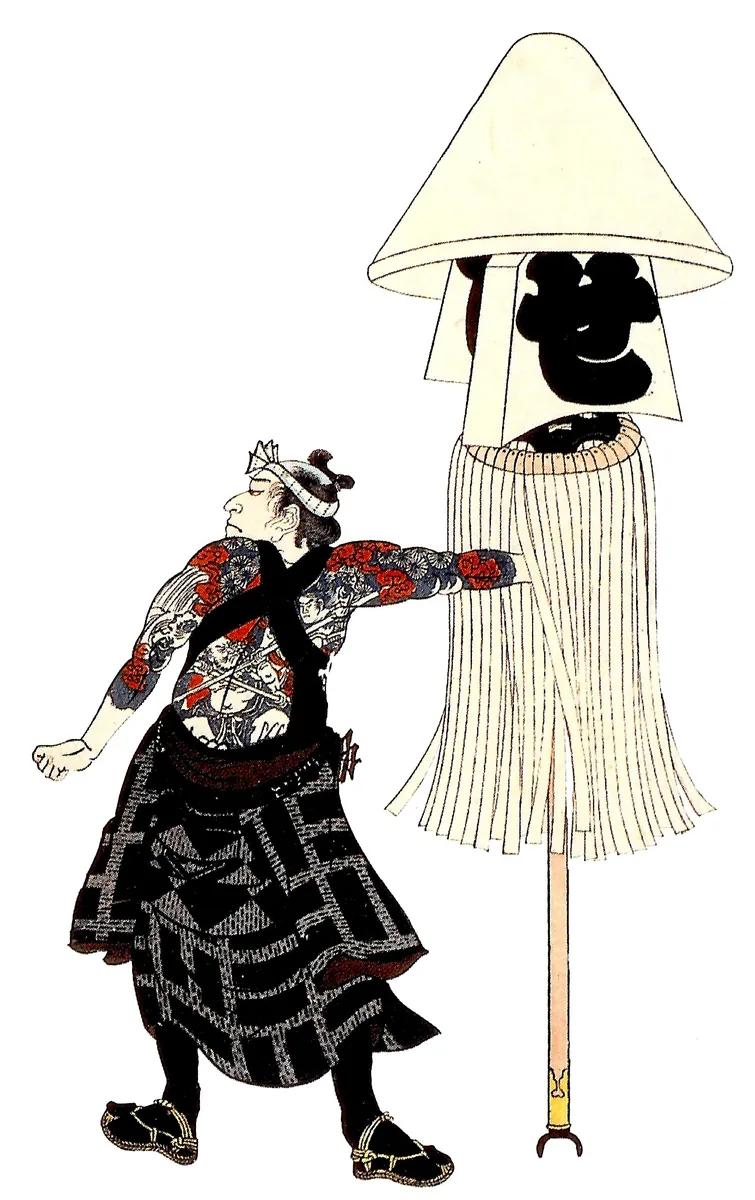
The people who wore these tattoos were firefighters, carpenters, porters and labourers, men who worked half-dressed in a city that burned often. The firefighters were called hikeshi, and they and the labourers wore bodysuits.
The tattooers took their title from the print trade. Horishi means carver, and it was already the word for the craftsmen who cut the woodblocks that prints were made from. The woodcut tattoo page describes that craft from the European side.
What defines the style
A Japanese piece is one picture, however much of the body it covers. It has a main subject, such as a dragon, a koi swimming up a waterfall or a warrior. Around the subject there are flowers, which tattooers match to the season as a matter of practice, and behind everything runs a background of wind, water and cloud that joins the parts together.
Wikipedia's page on irezumi lists the usual subjects. The mythological ones include dragons and foo dogs. The animals include koi, tigers and snakes, and the flowers are peonies, cherry blossoms, lotuses and chrysanthemums.
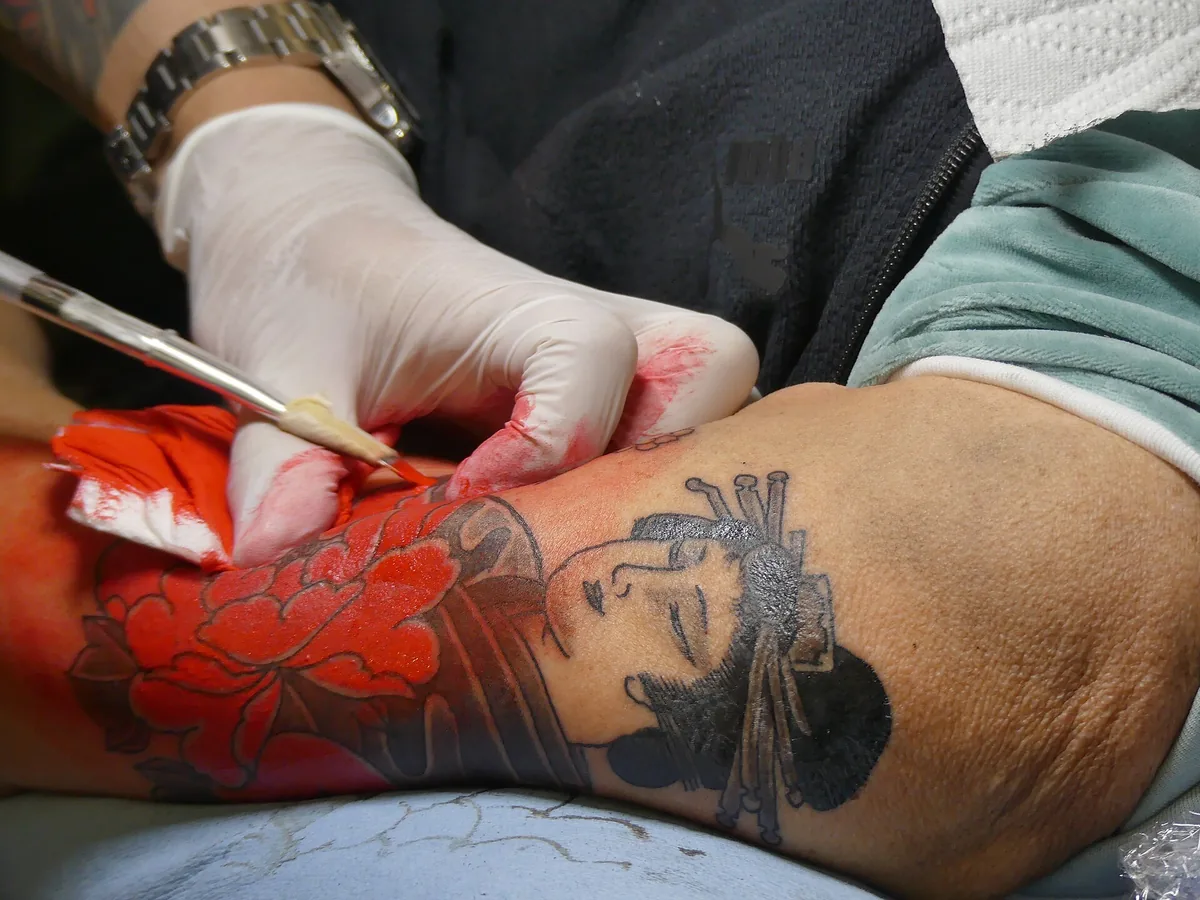
The traditional method is tebori, tattooing by hand, with metal needles tied to a wooden handle with silk thread. Some tattooers now outline with a machine and still shade and colour by hand.
The ban, 1872 to 1948
In 1872 the Meiji government, which wanted Japan to look modern to the West, banned decorative tattooing. Western visitors went looking for it anyway. In 1881 two British princes visited, and one of them, the future King George V, went home with a dragon on his arm. The Royal Collection Trust quotes his diary on it: a "large dragon in blue and red writhing all down the arm". The work is generally attributed to the tattooer Hori Chiyo.
Tattooing became legal again in 1948, under the occupation. During the underground years it had become tied to the yakuza, and the stigma has lasted. Many bathhouses still turn tattooed people away.
The law over who may tattoo took longer to settle. In 2017 Taiki Masuda, a tattooer in Osaka, was fined 150,000 yen for working without a medical licence. The fine was overturned in 2018, and in September 2020 the Supreme Court of Japan upheld that decision.
Size and placement
Wikipedia describes a typical traditional bodysuit as covering the arms, back, thighs and chest, with a space left down the centre of the torso. That open strip is called munewari. A suit like this "can take up to five years of weekly visits to complete, and cost in excess of US$30,000".
A single area follows the same structure on a smaller scale, with a main subject and room around it for background. The back is the largest single surface on the body, and the 30 cm tattoo page describes how much of a back, thigh or chest that size covers. The tattoo size chart compares the sizes below it.
How Japanese tattoos age
Every tattoo line spreads a little over the years. Ray Studios, a tattoo studio that has written about this, says "a very fine line can double in width, without the tattoo being considered a failure", and that fine-line tattoos are the most vulnerable to ageing.
Where a tattoo sits matters as well. The same article says tattoos change more quickly on the hands, fingers, neck, feet and ribs, while "more stable areas such as the upper back or the thighs generally hold up better over time". The traditional suit covers both. Sun is the other factor Ray Studios names: a tattoo exposed regularly without protection "ages faster, becomes duller and more blurred". The guide to placements that age best goes through each area.
Questions
What is the Japanese tattoo style called?
Irezumi is the Japanese word for tattoo, and in English it names the style. Horimono is another word for it, and wabori is a catch-all term for traditional Japanese tattooing practices. The tattooer is a horishi, a title borrowed from the carvers of woodblocks.
Are tattoos legal in Japan?
Yes. Decorative tattooing was banned in 1872 and made legal again in 1948. In September 2020 the Supreme Court of Japan upheld the acquittal of Taiki Masuda, an Osaka tattooer fined in 2017 for working without a medical licence. Many bathhouses still turn tattooed people away.
How long does a Japanese bodysuit take?
Years. Wikipedia's page on irezumi says a typical traditional bodysuit, covering the arms, back, thighs and chest, can take up to five years of weekly visits and cost more than US$30,000.
What is tebori?
Tebori is tattooing by hand. The needles are tied to a wooden handle with silk thread and pushed in without a machine. Some tattooers outline by machine and do the shading and colour by tebori.
Try a design at its real size
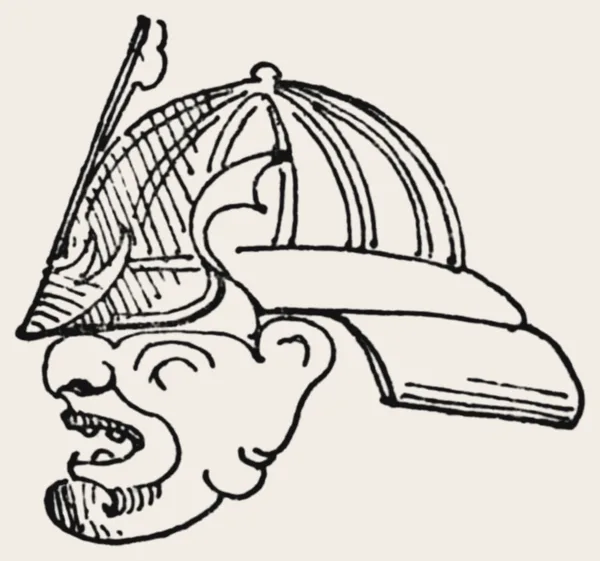
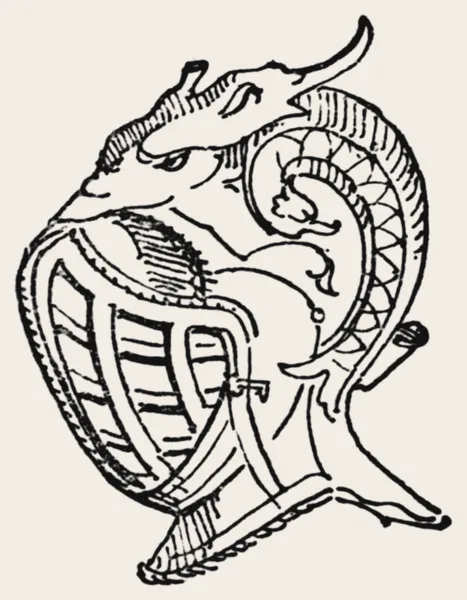
plan.tattoo puts a design on a 3D plaster cast at the size you type in centimetres, so you can turn the cast and see how much of an arm or a back the piece covers before you book. It is free, it runs in the browser, and you can start without an account. The tool also has its own flash, engravings from a 1911 book of arms and armour. None of it is Japanese tattoo work, but the Japanese helmet and the dragon-crested burgonet share two of the style's subjects, and the rest is on the flash page.
Sources: Wikipedia: Utagawa Kuniyoshi · Harvard History of Art and Architecture: MFA, Tattoos in Japanese Prints · Ronin Gallery: Ink, Banditry and Bushido, the hikeshi · Canterbury Museum: Behind the tattooist's art · Wikipedia: Irezumi · JR Pass: A guide to visiting Japan with tattoos · Royal Collection Trust: Royal tattoos · Time Out Tokyo: Tattoo artists in Japan no longer need a medical licence to practise · The Japan Foundation, Sydney: Horisumi · Ray Studios: Why some tattoos blur over time